do away with
US
・UK
A1
phr. v.Phrasal VerbTo remove or take something away; to kill
We need to do away with all these luxuries we cannot afford
phr. v.Phrasal VerbTo get rid of; abolish; eliminate.
The company decided to do away with the old computer system.
phr. v.Phrasal VerbTo kill someone.
The gangster threatened to do away with anyone who betrayed him.
Video subtitles
Democratic Presidential Debate - June 26 (Full) | NBC News

- And I think that the more people are going bankrupt because they had a medical condition that was unexpected or a sick child, the more the argument that maybe we should do away with this system that is bankrupting families, I think that can resonate when people look at the real-world circumstances.
And I think that the more people are going bankrupt because they had a medical condition that was unexpected or a sick child, the more the argument that maybe we should do away with this system that is bankrupting families, I think that can resonate when people look at the real-world circumstances.
- And I think that the more people are going bankrupt because they had a medical condition that was unexpected or a sick child, the more the argument that maybe we should do away with this system that is bankrupting families, I think that can resonate when people look at the real-world circumstances.
And I think that the more people are going bankrupt because they had a medical condition that was unexpected or a sick child, the more the argument that maybe we should do away with this system that is bankrupting families, I think that can resonate when people look at the real-world circumstances.
Why Does Texting Feel Different from Talking? | Otherwords

- Asynchronous communication can also do away with filler words, those ums and likes, and you knows, we use when we're trying to complete a thought.
Asynchronous communication can also do away with filler words, those ums and likes, and you knows, we use when we're trying to complete a thought.
- Asynchronous communication can also do away with filler words, those ums and likes and you knows we use when we're trying to complete a thought.
Asynchronous communication can also do away with filler words, those ums and likes and you knows we use when we're trying to complete a thought.
How Elon Musk Plans to Change Twitter | WSJ

- He'll need to come up with other ways Twitter can make money, but I don't think he can really afford right now to do away with advertising.
He'll need to come up with other ways Twitter can make money, but I don't think he can really afford right now to do away with advertising.
- He needs the cash flow from Twitter, and he'll probably need more of it; he'll need to come up with other ways Twitter can make money, but I don't think he can really afford, right now, to do away with advertising.
He needs the cash flow from Twitter, and he'll probably need more of it; he'll need to come up with other ways Twitter can make money, but I don't think he can really afford, right now, to do away with advertising.
Chesterton Fence: Don’t Destroy What You Don’t Understand!
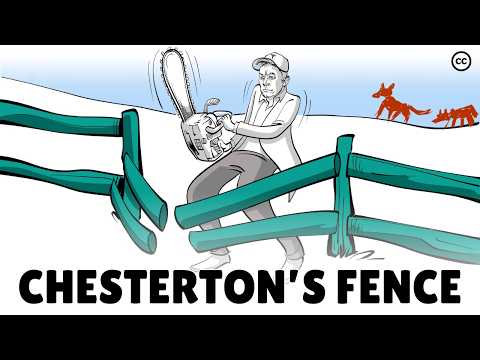
- Chesterton's fence is a simple rule of thumb that suggests that you should never destroy a fence, change a rule, or do away with a tradition until you understand why it's there in the first place. The principle assumes that fences have a purpose, were carefully planned, and cost time and money to erect.
Chesterton's fence is a simple rule of thumb that suggests that you should never destroy a fence, change a rule, or do away with a tradition until you understand why it's there in the first place. The principle assumes that fences have a purpose, were carefully planned, and cost time and money to erect.
- Chesterton's fence is a simple rule of thumb that suggests that you should never destroy a fence, change a rule, or do away with a tradition until you understand why it's there in the first place.
Chesterton's fence is a simple rule of thumb that suggests that you should never destroy a fence, change a rule, or do away with a tradition until you understand why it's there in the first place.
Race, Class, and Gender in To Kill a Mockingbird: Crash Course Literature 211

- In 1875, the English poet and critic Matthew Arnold argued that culture seeks to do away with classes, to make the best that has been thought and known in the world current everywhere, to make all men live in an atmosphere of sweetness and light.
In 1875, the English poet and critic Matthew Arnold argued that culture seeks to do away with classes, to make the best that has been thought and known in the world current everywhere, to make all men live in an atmosphere of sweetness and light.
- So To Kill a Mockingbird didn't do away with class structure,
So To Kill a Mockingbird didn't do away with class structure,
Iceland Eurovision 2014 - No prejudices (Official Video)

- Let's do away with prejudice.
Let's do away with prejudice.
- Let's do away with prejudice don't discriminate, tolerance is bliss
Let's do away with prejudice don't discriminate, tolerance is bliss
HISTORY OF IDEAS - Manners

- Rousseau now contrasts favourably with modern mannered people. Rousseau tells us that people living in what he calls the state of nature were, in his eyes, far superior to educated and mannered Parisians. Their manners may have been simple, but they were honest and forthright, without the sins of what he now terms the over-civilised. Rousseau retells the story of civilisation as one of loss and decline, from a primordial state of fresh-faced curiosity, honesty and enthusiasm, to barbarous over-politeness, fakery and deceit. He describes the elaborate French court at Versailles as less civilised than an early human cave. Readers across Europe are astonished, and not a little impressed, by this impudence. For hundreds of years, moralists have been arguing that our natural selves are wild, harmful, over-sexual and dangerous, and that we must learn to tame them for the sake of others. Now Rousseau suggests the diametrical opposite. Civilisation has gone too far, it's our mannered selves that have become the problem, and the task of a properly evolved civilisation is to throw off the chains of manners, to relax us, strip off the etiquette and return to primitive frankness. Rousseau's point continues to echo down to our own times. It is his voice we can hear whenever someone sticks up for the simpler life, and suggests we dress less formally, eat dinner more casually and more readily say whatever is passing through our minds. New York, United States, 1827. A French aristocrat, Alexis de Tocqueville, is on a tour of the young United States in an effort to understand the spirit of a new kind of society, a democracy. He is immediately struck by American manners, or lack thereof. In Europe, reflects de Tocqueville, manners have been codified to emphasise hierarchical differences between people. Ordinary people defer to aristocrats, aristocrats to royalty, and so on. But in the United States, everything is done so as to suggest that there are no differences between people. No one takes off their hat to anyone, a postman can casually greet a judge, a mule driver can strike up cheerful banter with a wealthy merchant, and one cannot tell by someone's clothes whether they might be living in a mansion or a hut. Expressions like how you doing and hi are heard everywhere across the new republic. It could be charming, but the aristocratic de Tocqueville wryly notes a problem. These casual manners do not do away with class and wealth differences. They merely sentimentally disguise them. The manners of old Europe have been accused of being cruel in their stress on hierarchy.
Rousseau now contrasts favourably with modern mannered people. Rousseau tells us that people living in what he calls the state of nature were, in his eyes, far superior to educated and mannered Parisians. Their manners may have been simple, but they were honest and forthright, without the sins of what he now terms the over-civilised. Rousseau retells the story of civilisation as one of loss and decline, from a primordial state of fresh-faced curiosity, honesty and enthusiasm, to barbarous over-politeness, fakery and deceit. He describes the elaborate French court at Versailles as less civilised than an early human cave. Readers across Europe are astonished, and not a little impressed, by this impudence. For hundreds of years, moralists have been arguing that our natural selves are wild, harmful, over-sexual and dangerous, and that we must learn to tame them for the sake of others. Now Rousseau suggests the diametrical opposite. Civilisation has gone too far, it's our mannered selves that have become the problem, and the task of a properly evolved civilisation is to throw off the chains of manners, to relax us, strip off the etiquette and return to primitive frankness. Rousseau's point continues to echo down to our own times. It is his voice we can hear whenever someone sticks up for the simpler life, and suggests we dress less formally, eat dinner more casually and more readily say whatever is passing through our minds. New York, United States, 1827. A French aristocrat, Alexis de Tocqueville, is on a tour of the young United States in an effort to understand the spirit of a new kind of society, a democracy. He is immediately struck by American manners, or lack thereof. In Europe, reflects de Tocqueville, manners have been codified to emphasise hierarchical differences between people. Ordinary people defer to aristocrats, aristocrats to royalty, and so on. But in the United States, everything is done so as to suggest that there are no differences between people. No one takes off their hat to anyone, a postman can casually greet a judge, a mule driver can strike up cheerful banter with a wealthy merchant, and one cannot tell by someone's clothes whether they might be living in a mansion or a hut. Expressions like how you doing and hi are heard everywhere across the new republic. It could be charming, but the aristocratic de Tocqueville wryly notes a problem. These casual manners do not do away with class and wealth differences. They merely sentimentally disguise them. The manners of old Europe have been accused of being cruel in their stress on hierarchy.
- These casual manners do not do away with class and wealth differences.
These casual manners do not do away with class and wealth differences.
Ray's Story: A Death Penalty Mistake

- Executing an innocent person has most likely happened and will continue to happen until we do away with the death penalty.
Executing an innocent person has most likely happened and will continue to happen until we do away with the death penalty.
- most likely happened and will continue to happen until we do away with the death penalty.
most likely happened and will continue to happen until we do away with the death penalty.
Jacque Fresco - Introduction to Sociocyberneering - Larry King (1974)
- and do away with the red tide.
and do away with the red tide.
- oxygenate the water, and do away with the red tide.
oxygenate the water, and do away with the red tide.
How close is America to civil conflict? | The Gray Area
- And then we also know it allows the leader to declare emergency rule and basically do away with any sort of democratic constraints as long as the war is going on.
And then we also know it allows the leader to declare emergency rule and basically do away with any sort of democratic constraints as long as the war is going on.
- And then we also know it allows the leader to declare emergency rule and basically do away with any sort of democratic constraints as long as the war is going on.
And then we also know it allows the leader to declare emergency rule and basically do away with any sort of democratic constraints as long as the war is going on.